



If you’re currently vibing with the sound of the piano and want to start teaching yourself, you’re on the right track! Playing piano isn’t as hard as you think if you start in the right place—and the first key to unlocking the world of music is Piano Chords. Whether you want to cover your favorite song on TikTok or just play to de-stress in your room, knowing basic chords will help you level up at lightning speed. In this article, UOB Live will introduce you to the essential chords every beginner needs to know. You'll be rushing to your piano by the time you're done reading!
What is a Piano Chord?
A Piano Chord is the act of pressing three or more notes simultaneously to create a harmonious sound. If a single note is like an individual color, a chord is the blending of those colors to create a beautiful, multi-dimensional painting. The sounds produced evoke different emotions; some chords sound bright and happy, while others feel sad and soulful, depending on the combination of notes you choose.
Why Do You Need to Know Chords?
You might wonder, "Can't I just play one note at a time? Why bother with chords?" The answer is that chords are the backbone of almost every song in the world. Knowing them makes playing much more fun and versatile:
- Accompaniment: Chords allow you to play along while singing. If you know the chords, you can back your own vocals instantly.
- Faster Learning: Understanding chord structures helps you "decode" new songs quickly without having to hunt for every single note.
- Songwriting: For those dreaming of becoming a producer or songwriter, mastering chords is an indispensable skill.
Basic Piano Chords Beginners Must Master
As a beginner, you don't need to memorize every chord in existence. Focus on the ones most commonly found in Thai and international Pop hits. Mastering just this specific set will allow you to play hundreds of songs. Let’s see what they are..

Major Chords
Major chords sound bright, happy, and clear. They are the most common foundation for any song.
- C Major (C): Consists of the notes C - E - G (Do - Mi - Sol). This is the very first chord everyone learns!
- G Major (G): Consists of the notes G - B - D (Sol - Ti - Re).
- F Major (F): Consists of the notes F - A - C (Fa - La - Do).
Minor Chords
Minor chords provide a sad, lonely, or deep sound. They are perfect for adding emotional depth to a song.
- A Minor (Am): Consists of the notes A - C - E (La - Do - Mi). The perfect partner to the C Major chord.
- E Minor (Em): Consists of the notes E - G - B (Mi - Sol - Ti).
- D Minor (Dm): Consists of the notes D - F - A (Re - Fa - La).
Practice Techniques to Master Chords for Beginners
Knowing the theory is one thing, but you have to get your hands on the keys! Use these techniques to make your fingers more fluid:
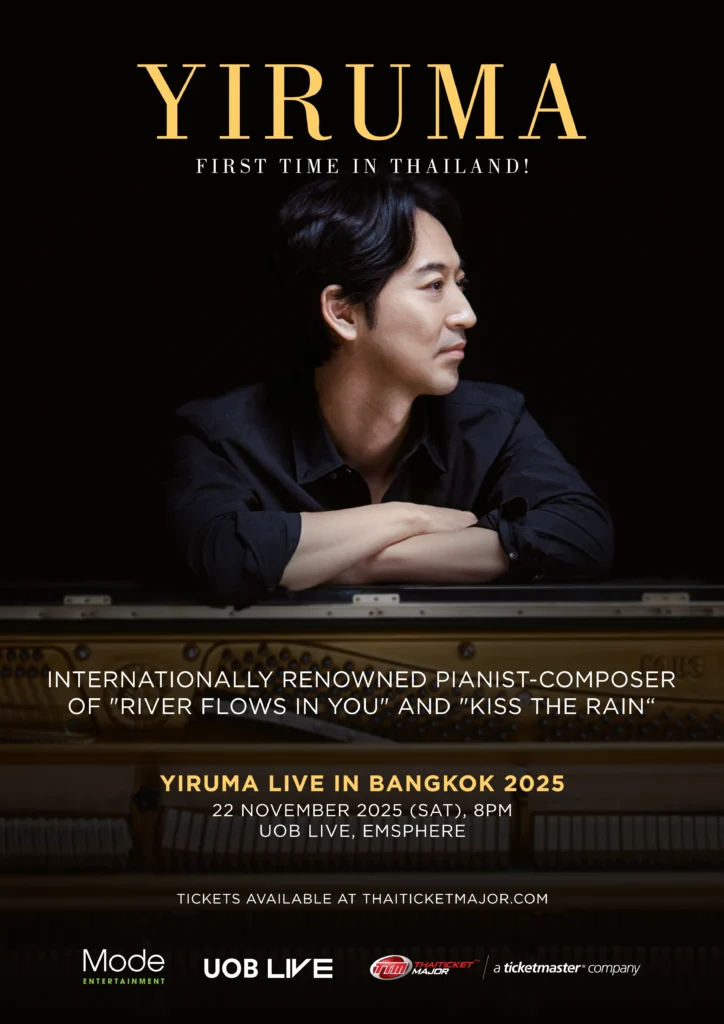
- Practice with songs or artists you love: Having an idol as inspiration makes you want to practice more. Try picking simple songs from your favorite artists. For instance, if you love sweet piano melodies, you likely know the "King of Romance," Yiruma. The Korean pianist is actually bringing his YIRUMA Live in Bangkok concert to us very soon! Seeing a world-class artist perform live is a great way to spark your passion for practice.
- Use a Metronome for precision: It might be tough at first, but practicing chord transitions with a metronome (rhythm keep) ensures you play on beat without rushing or dragging. You’ll sound like a pro when playing with friends or a backing track!
- Play and Sing simultaneously: Try humming softly while pressing the chords. This helps your ears distinguish harmonies and is excellent for training the coordination between your voice and your hands.
Summary
Practicing piano chords requires patience, especially at the start when your fingers won't quite follow orders. But believe me—once you push through that initial phase, the world of music becomes infinitely more fun! Try carving out 15–30 minutes a day to master these basic chord shapes, then gradually move on to your favorite songs. Consistency is the secret to getting better.
For those who love the sound of the piano or want to experience live music in a world-class hall, don't miss YIRUMA Live in Bangkok. Catch the composer of "River Flows in You" performing live in a spellbinding atmosphere on Saturday, November 22, 2025, at UOB Live. With our top-tier sound system and immersive vibe, it’s the ultimate inspiration that will make you want to run home and play!
If you're looking for the best Concerts in Bangkok to heal your soul or ignite your passion, follow us! The lineup at UOB Live features only top-tier artists who will leave you with unforgettable memories. See you at the hall!
Frequently Asked Questions (FAQ) about Piano Chords
Which chord should a beginner start with?
I recommend starting with C Major (C). It is the easiest chord to press and serves as the foundation for most music theory. Once you're comfortable, move on to G, F, and Am respectively.
Do I need to be able to read sheet music to play chords?
Not necessarily! You don't need to read a five-line staff fluently to play chords. Chord playing focuses more on memorizing finger patterns (shapes) and English note names (C, D, E…). However, knowing the basics of notation will eventually help you understand music more deeply.
How long does it take to play basic chords fluently?
It depends on your practice habits. If you practice consistently for at least 30 minutes a day, most people can memorize and switch between basic chords fluently within 2–3 weeks, allowing you to start playing simple songs with confidence.